
What Makes a Porta Potty ADA Compliant?
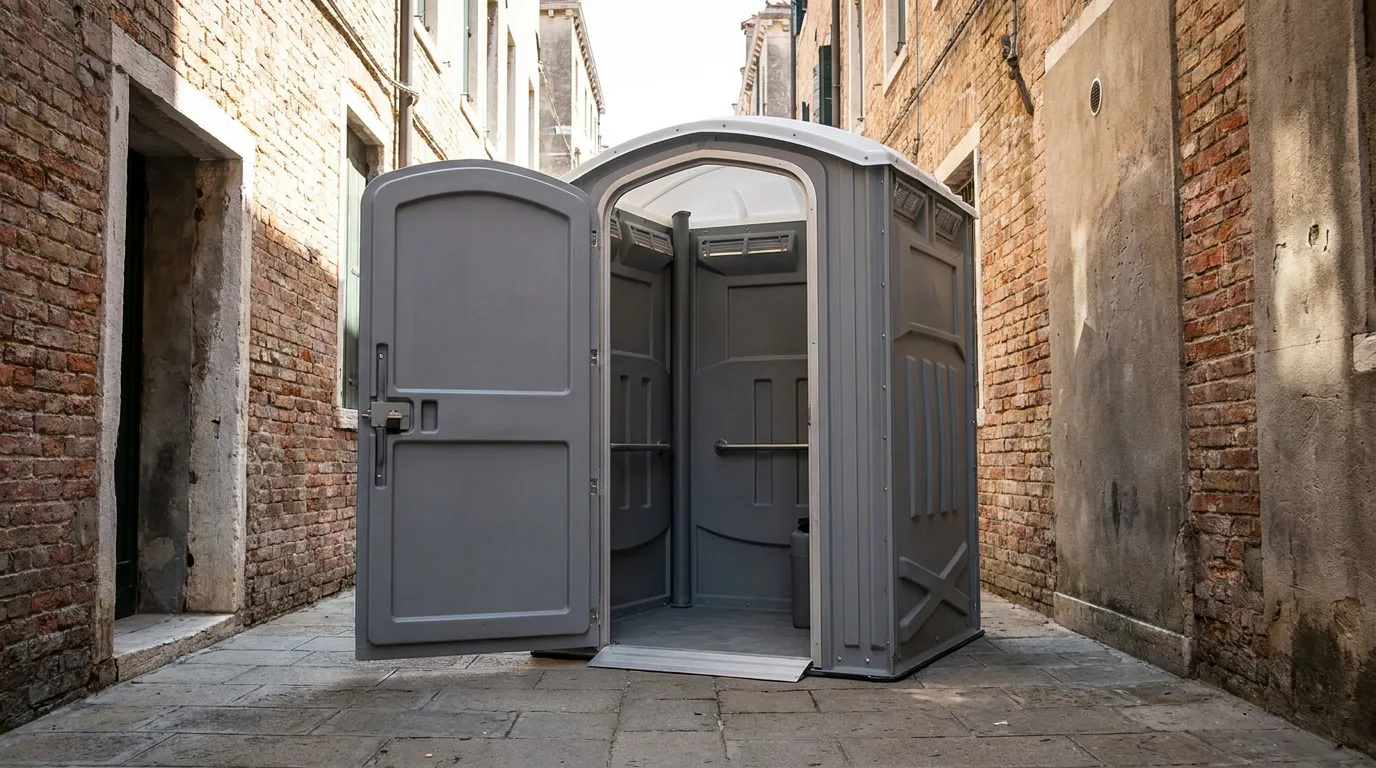
Size and clearance, mostly. ADA Standards section 404.2.3 sets the minimum clear door opening at 32 inches, wider than a standard unit's door because a wheelchair user needs room to get through without backing up or turning sideways. Inside, ADA Standards section 304.3.1 calls for a 60 inch diameter turning circle, so a chair can rotate fully once the door shuts. The route getting there matters just as much. ADA Standards section 403.5.1 sets a 36 inch minimum clear width for the path itself, and ADA Standards section 302.1 requires that ground be stable, firm and slip resistant, which rules out loose gravel or soft turf as a base. Grab bars, a lower toilet seat height, and hardware that operates without tight grasping (ADA Standards section 309.4 caps the force needed at 5 pounds) round out the unit. Our ADA accessible porta potty page has photos and layout specs if you want to see one before you book. Most renters pair one accessible unit with several standard porta potty rental units rather than making every unit accessible, which is allowed and is how the ratio rule below works.
How Many ADA Units Do I Need in Knoxville?
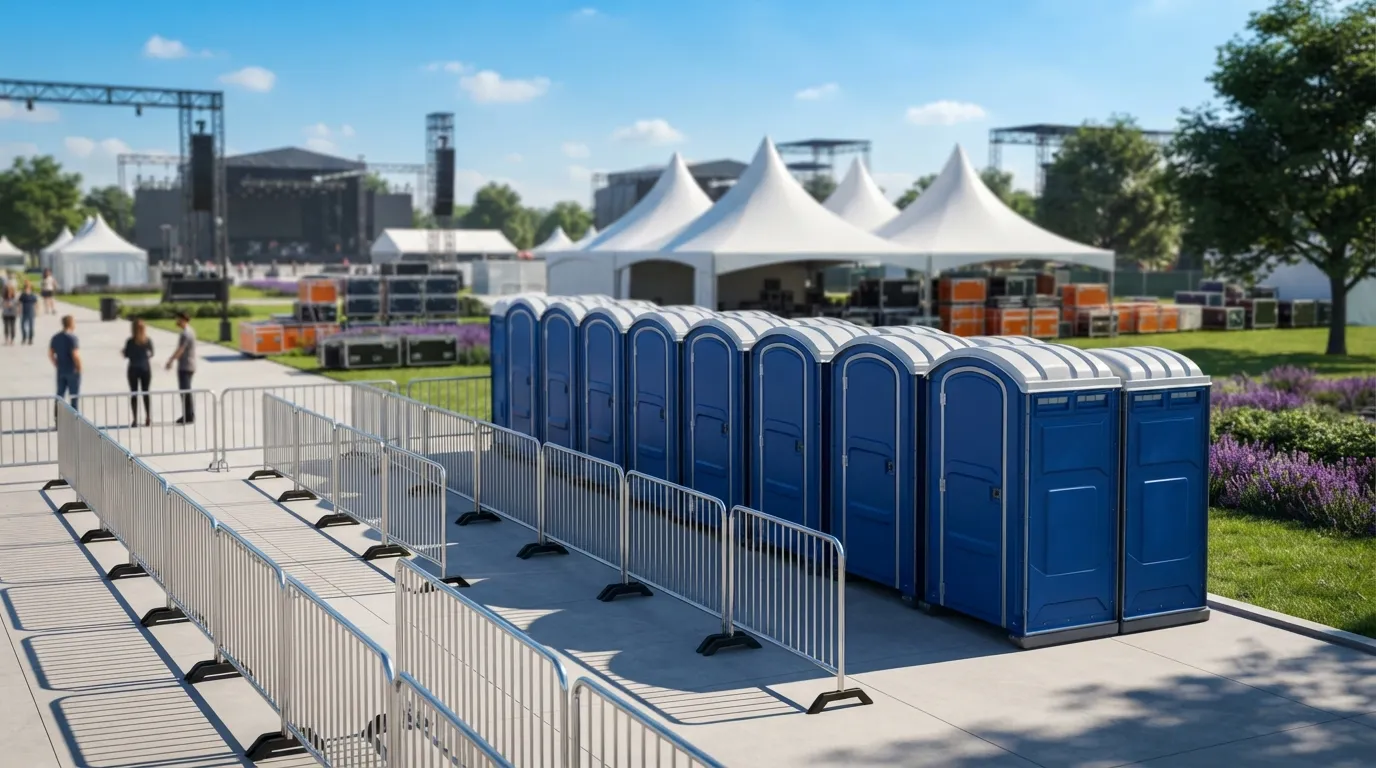
One accessible unit for every cluster of standard units, minimum. ADA Standards section 213.2 requires that at least 5 percent of a cluster of single-user portable toilets be accessible, and never fewer than one, no matter how small the cluster is. That means a 4-unit bank at a Knoxville festival still needs one accessible unit, and a 40-unit bank needs at least two. This is separate from the OSHA portable toilet requirements that set the total count based on worker headcount. Job sites follow OSHA 1926.51(c)(1): one toilet for 20 or fewer workers, then one toilet and one urinal per 40 workers as the crew grows past that, up to one per 50 once you're past 200 workers. Event planners should start with our how many porta potties do I need guide, then add the ADA unit on top of that base count. If you're not sure which side of the line your project falls on, use the request a quote form and we'll walk the numbers with you.
Where Should the ADA Unit Go on Site?
At the front of the row, on the flattest, hardest ground you've got. ADA Standards section 302.1 requires a stable, firm, slip resistant surface, so a paved lot or a compacted gravel pad beats grass or mulch every time. The path to it needs that same 36 inch clearance the whole way, per ADA Standards section 403.5.1, with no step, curb, or gap that would stop a wheelchair or a walker. If there's any grade change, ADA Standards section 405.2 caps ramp slope at 1:12, which is a long run for a short rise, so plan for it rather than bolting on a steep ramp after delivery. Inside reach, ADA Standards section 308.2.1 sets a 48 inch maximum and 15 inch minimum reach range for controls and dispensers, which is why placement inside the unit isn't something you can improvise on site. Our porta potty placement guide covers ground prep and clearance in more depth, and it's worth a read before your delivery truck shows up, since a roll-off or restroom trailer rental delivery on the same site needs its own clearance too.
Does Knoxville Require ADA Units for Every Event?
It depends on the event and the crowd, and this is one to confirm with the city rather than guess at. Placement in the public right of way, closing a lane or blocking a sidewalk for your restroom bank, needs confirming with the City of Knoxville before you commit to a layout. What's consistent everywhere is the accessibility ratio itself: ADA Standards section 213.2 doesn't bend based on venue or permit status. If you're planning something like a race through downtown, check our marathon and race restrooms page, and for a fairground layout see county fair restrooms. Weddings and smaller private events at venues without heavy foot traffic still benefit from having one accessible unit on site, covered on our wedding restroom rental page. For daily cost context across unit types, our porta potty rental cost and porta potty rental per day pages break down pricing by duration.
| unit | day | week |
|---|---|---|
| ada | $200 - $400 | $250 - $500 |
| standard | $100 - $350 | $130 - $500 |
How much does an ADA porta potty cost to rent in Knoxville?
A day rate runs $200 to $400, and a full week runs $150 to $500 since most renters on a single-day rate actually need multiple days covered. Multi-day events usually come out cheaper per day on a longer rental. See porta potty rental cost for how this compares against standard units.
Can I rent just one ADA unit without a full bank of standard units?
Yes. Plenty of small renovation jobs and single-day events book one accessible unit on its own. Check our home renovation porta potty page, or start a request a quote if you're not sure what else you need.
Do construction sites in Knoxville need an ADA unit?
Not automatically. OSHA's toilet count rule, 1926.51(c)(1), doesn't require accessible units by itself. ADA Standards section 213.2 applies when units are clustered for public or mixed use. Our construction site services page covers standard job site setups.
What's the difference between ADA units and deluxe flushable units?
ADA units are built around clearance and reach specs; deluxe units add flushing and a nicer interior. You can get both in one unit. See deluxe flushable porta potty for details on that upgrade.
How far in advance should I book an ADA unit for an event?
As soon as your headcount and layout are set. ADA units have fewer rental datapoints than standard units, so availability is tighter. Use request a quote early, especially for weekend events near Farragut or Alcoa.
Next step
Get a delivery date
Tell us the address, the dates and the headcount. We size the order and confirm the route.